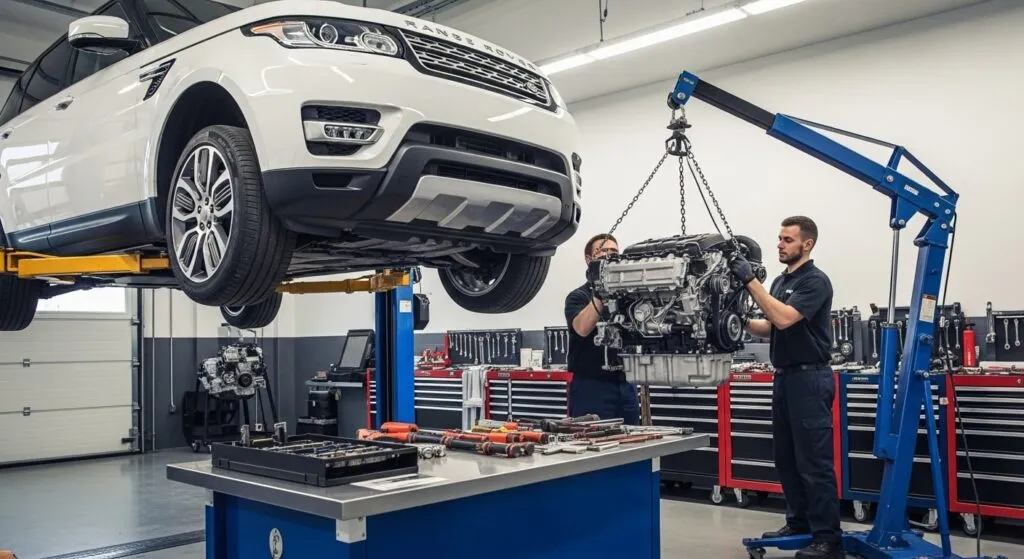
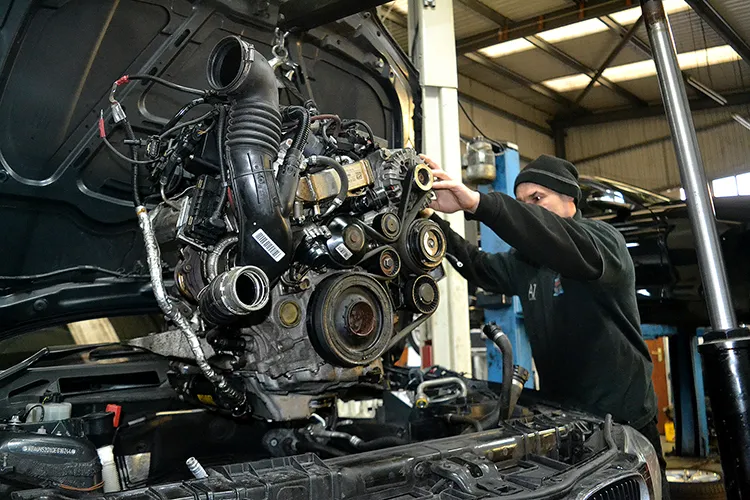

A Land Rover engine breakdown is not common overnight. It’s more like a slow leak in a tire than a sudden blowout. Years of working under the bonnets of Range Rovers, Discovery Sports, and Defenders across London and Essex have taught us one thing: Engines always communicate before they abandon you. The key is learning to pay attention.
This manual uses actual workshop experience, not intuition, to assist you in spotting early warning flags before your cherished Land Rover leaves you stranded on the A12.
Why Do Land Rover Engines Fail More Than You’d Expect?
Land Rovers are amazing cars: tough, capable and made for adventure. But that complexity comes at a price. Compared to a simpler engine, turbocharged diesel units, timing chains, and complex emissions systems imply more that might go wrong. It’s a little like having a Swiss watch instead of a wind-up clock; it’s spectacular but difficult.
Discovery Sport engine problems and Range Rover engine defects are common topics in owner forums for a reason.
Early Indicators of Engine Failure
Consider these symptoms the version of a persistent cough your car offers before the flu hits properly.
Unusual sounds from under the bonnet include knocking, ticking, or rattling.
Overheating: temperature gauge rising on brief trips.
Too much exhaust smoke—blue, white, or thick black plumes.
Oil consumption rises, exceeding typical levels.
Loss of power—sluggish acceleration particularly on hills.
Warning lights — engine management light staying persistently on.
Ignore these long enough and you're considering a full replacement, not a repair.
Your Land Rover Discovery Sport is attempting to communicate something to you
Owners of the Land Rover Discovery Sport sometimes mention a particular pattern: erratic idling then sporadic power loss. Sounds familiar? This usually results from damaged injectors or timing chain stretch; both are progressive defects that worsen over time. Getting it early will mean the difference between replacing a timing chain and having to rebuild the entire engine. Range Rover Sport owners run into comparable problems, especially with the Ingenium diesel engines, when timing chain wear is a well-known source of agony.
How Do You Distinguish Between a Little Flaw and a Significant Problem?
This is the point at which some investigation helps.
Small damage indicators:
-
Periodic alarm a light that cleans itself
-
Small rise in fuel consumption
-
Faint odor just under high acceleration
Important signs of problems:
-
Continuous knocking that varies with engine speed
-
Coolant inexplicably vanished.
-
milky stuff on the oil cap (a traditional head gasket giveaway)
If the second list is visible, go right now. A skilled engine diagnostics check might help you to identify the problem before it spirals into anything terrible.

Why Discovery Sport Engine Issues So Frequently Spirals?
It's the domino effect. A little oil leak can deplete a bearing. A stretched timing chain can move a tooth. One neglected error sets off the following ones.
Imagine your engine as a Jenga tower; if you pull one piece out without thought, the entire thing might collapse. Regular maintenance keeps that first part from ever wobbling.
Most Land Rover Engine Problems: What Is the Reason?
Years of practical repair work suggest the following usual suspects:
1. Timing chain extension, especially on Ingenium and TD4 engines
2. The EGR valve getting clogged, which happens often on diesel cars that make a lot of short journeys.
3. Turbocharger wear - from age or oil shortage
4. Head gasket breaking, usually brought on by episodes of overheating
5. Injector problems—which lead to bad gasoline economy and bumpy running.
Seems like much? Indeed it is. But that is exactly why regular maintenance on these cars is so important.
Are Range Rovers More Prone to Engine Faults Than Other Land Rovers?
Not always more prone; rather, because of their popularity and the passionate community of owners online, they are only more reported. Range Rovers utilize a lot of the same engine architecture as Discovery Sports and Evoques, hence the same issues show up over the range.
The main distinction? Early discovery saves your wallet since Range Rover maintenance frequently costs more just because of parts and labour.
What Should You Do the Moment You Spot an Engine Issues?
Don't play the waiting game; it's a risk you're probably going to lose.
1. Make an appointment right away for a diagnostic test. Strategy is not guesswork.
2. Stay clear of long distance travel till the problem is found.
3. In the meanwhile, check the levels of oil and coolant each week.
4. Get an expert view rather than only a forum thread's best estimate.
A reputable expert providing vehicle engine repair may rapidly determine seriousness and present you sincere choices: repair, rebuild, or replace.
Can Regular Maintenance Really Stop These Problems?
Yes, and this is the element most owners fail to give due weight. Here, prevention really is less costly than treatment.
-
Maintain manufacturer-suggested service intervals.
-
Use the appropriate grade of oil; cutting corners here is a false economy.
-
Handle minor warning lights right now, not next month.
-
If your engine is older but otherwise sound, think about engine rebuilding.
Though it will greatly postpone the unavoidable and occasionally stop it completely, regular maintenance won't make your engine immortal.

When Should One Think About a Complete Engine Replacement?
There are times when, despite your best attempts, fixing just costs too much for now. It's worthwhile looking at other possibilities if you're having chronic failures, a lot of internal damage, or a bill virtually equivalent to the cost of a replacement unit.
At this point, finding a good refurbished engine sometimes makes more financial sense than throwing money into an old block that keeps battling back.
Conclusion: Trust Your Instincts (and Your Ears)
The reality is this: you are the person who knows your Land Rover the best. Daily driving helps you to notice its oddities and to sense when something is wrong. That gut feeling is trustworthy.
A Land Rover engine breaking down is rarely a mystery; rather, it's a tale recounted in stages with sounds, odors, and warning lights if you're ready to listen. Catch the early sections and you will completely escape the spectacular, pricey ending.
F.A.Q's
1. How long can I drive with a failing engine?
It depends on the severity of signs, any ongoing warning light or odd sound calls for immediate attention; driving on runs the danger of converting a repair into a replacement.
2. Does the warranty cover Discovery Sport engine issues?
This will depend on the age of your vehicle and the terms of its warranty. Generally, manufacturers’ warranties will cover production faults, but not problems caused by general wear and tear.
3. How much do Range Rover engine faults usually cost to repair?
The cost can vary from a few hundred pounds to replace a sensor, to many thousands of pounds to fully rebuild or replace an engine, depending on the nature of the fault.
4. How do I get good performance from an old Land Rover engine?
Many old engines can be relied upon to give good service for years if they are maintained properly and faults are attended to quickly.
5. Are reconditioned engines as reliable as new ones?
Reconditioned engines from reputable sources are extensively tested and reconditioned and can be expected to give similar reliability at a fraction of the price.
BNS Motors Editorial Team
Expert insights on reconditioned engines, vehicle maintenance, and performance upgrades. We bring years of automotive excellence to your screen.