
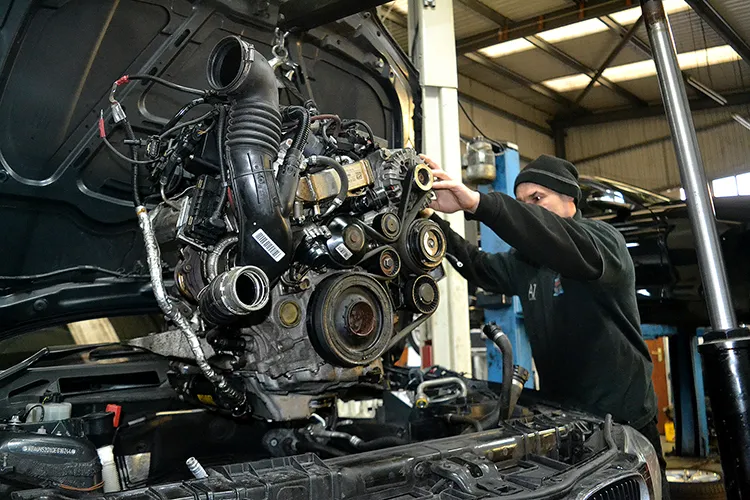

Every tradesman you know has said the same thing to you at some point: bought one cheap, thrashed the hell out of it, and it “just kept going” until he absolutely knew it wasn’t.
That definition of a reputation for near indestructibility is fact, and a reputation earned by a truly hardy old engine, in a really different era for vans.
The Ford Transit van engine under the bonnet of a 2026 model is a different beast altogether: smarter, greener, more efficient, and a lot less forgiving if you don‘t know its one weakness.
Understanding each phase of the engine you’re examining, and more importantly what it asks of you, is what differentiates between 200,000 miles of trouble-free service and a naffed-up van at the two-thirds point of a job.
The Short Version
- The old 2.2/3.2-litre Duratorq diesels are mechanically simple and well proven but no longer available new and becoming increasingly difficult to source in the desirable condition.
- The present 2.0 litre Eco Blue is now more economical and friendly to the city‘s Ultra Low Emission Zone however has one commonly noted problem and this is the oil locked (“wet”) belt system.
- The Transit Connect (smaller engine) for D4C uses 1.5L/1.6L engines, which are more appropriate for light and mostly city use rather than for substantial daily loads.
- Trust in either comes down to one and only one habit: perfect, punctual servicing, not luck.
- Paying out for an engine which isn’t right for the way you use the van is more costly than purchasing the wrong van.
Which engines have actually been fitted on a Ford Transit?
Very first, it‘s much nicer to know what you‘re comparing, otherwise you‘re looking at used listings and wondering “what‘s that advertising?” because ford transit genuinely covers 3 different vans.
The regular Ford Transit has had 2.0L and 2.2L Duratorq diesels fitted to earlier models, changed to the 2.0L Eco Blue (from approximately 2016), and electric options are also being considered.
Next was the Ford Transit Custom 2.2-litre Duratorq till 2016, then 2.0-litre Eco Blue from 2017, now available from 105-185PS in the current model line-up with plug-in hybrid and full electric options.
First, the Ford Transit Connect, obviously the Tiniest of the trio, runs a 1.5L or 1.6L most of the time. This engine makes sense if most of your driving is stop-start city running rather than heavy daily load, an element that most buyers overvalue when pricing up.

What Ford Transit engine is really the best?
The exact question most of us search at 11 pm the night before looking at a van, so here goes: whatever badge is on it, it’s all relative to the period you’re comparing it to.
A live older unit is the 3.2-litre Duratorq (sometimes referred to as the ”Puma”), which has a good reputation for durability and long life, and many are still working hard well beyond 250k miles. The previous 2.0L Duratorq to Eco Blue is another Ford diesel generally recognised as one of the most robust and long-lived, as long as the EGR valve and injector seals are maintained.
Of all the current engines, the 2.0-litre Eco Blue is the best you can buy new – truly well-made, fuel-efficient and Euro 6/ ULEZ compliant – however ‘most reliable current option’ and ‘free of bother for maintenance’ are two very distinct statements, and therein lies the problem for owners.
How dependable is the Ford 2.0 EcoBlue engine?
Basically, yes, but with a major flaw that every EcoBlue owner should be aware of before it costs them three grand.
The EcoBlue uses a “wet belt,” which is a timing belt that is submerged in the engine oil rather than exposed, as in a traditional cambelt. Ford used this design feature in order to minimize the generation of noise, friction and emissions. That‘s a rather impressive example of engineering ingenuity.
In practice, there have been numerous warning signs from independent garages and industry bulletins about the same failure mode: oil contamination (frequently due to the diesel dilution of the oil during failed DPF regeneration cycles) causing accelerated belt material degradation and the presence of fragmented debris blocking the oil flow system. Several vans have demonstrated a problem well before the 100,000-mile threshold indicated by Ford’s own recommendations.
The fix is not complicated, though it is non-negotiable. Use Ford-approved oil; reduce the service intervals rather than extend them; and take action if you get a low oil pressure warning light or an unfamiliar rattle. This one practice is the reason why an EcoBlue will either easily outlive the end of its finance deal or struggle.
Which Ford Engine you should really avoid
If there‘s a time that you need to be a little more careful than most, it‘s an early Eco Blue vans 2016-18 era, perhaps Transit Custom 2015-16 MY, which inherited a bad reputation for engine and rear diff problems, before Ford got things sorted.
The lesser 1.0 litre EcoBoost petrol engines (used in a few lighter commercial vehicles) require a little bit more attention, as both the timing belt and cooling system issues have been found in a significant sample of these models by 80,000 miles if the vehicle has been neglected from a maintenance perspective.
The pattern for all of them is the same: it isn’t often the engine family that’s the problem. It‘s a van we bought with no service history and a seller who can‘t tell us the last time the belt was touched.
What is the real financial impact of ignoring maintenance?
Warning Sign What’s Likely Happening Caught Early Left Too Long
Rattling noise, low oil pressure warning Wet belt degradation (EcoBlue) Belt and oil system service Timing failure, possible transit engine replacement
Rough idle, power loss EGR valve clogging Valve cleaning or replacement Repeated limp mode, drivability failure
Blue/black smoke, whining Turbo wear, often oil-related Turbo service, correct oil grade Turbo failure, engine contamination
Dashboard “Service Now” alert ignored Overdue oil/filter change Routine Ford Transit custom service Accelerated wear across multiple systems

What kind of owner are you?
The daily tradesman: Short hops, frequent stops, engine not getting a chance to warm up properly between jobs. This kind of driving puts the most stress on the DPF regeneration, and therefore the wet belt in the Eco Blue.2. Regular servicing is the most affordable policy in the world to ensure your van’s long-term health.
A long-distance mover: Engine miles, stock loads, less cold starts. This really is kind to modern Eco Blue units, and they are normally seen turning hundreds of miles quickly without any issues, depending on whether or not servicing continues to take place on schedule rather than “when it’s easy”.
The cost-conscious purchaser: If you’re taking a look at a used Transit or Transit Custom to save some initial outlay. A used Duratorq with a full service history and an overhaul, or Ford remanufactured engines, may turn out to be a truly clever and economical approach – make sure you do not think “old and simple” means “maintenance-free”.
Does It Matter Who Serves or Rebuilds the Engine?
Yes, more than most buyers would expect. A run-of-the-mill garage would keep up with the oil change and leave it at that. A Transit-savvy individual, however, would also be way more aware of what to check for regarding wet belt condition, oil contamination symptoms, and EGR health, to name a few, every single time, instead of once already having issues.
If replacement does become necessary, then search out Ford rebuilt engines from a reputable specialist that fits genuine or OE-standard parts with a decent warranty, not the cheapest one on eBay that disappears without a trace afterwards.
Bottom Line
There was a reason the old Transit was regarded as almost indestructible; it was because that was a totally different engine in an entirely different age. Today’s Ford Transit van engine range is lighter, much more economical and certainly much cleaner; but it does lose some old-school forgiveness for a particular habit it requires from you: don’t over-stretch the service interval, and pay close attention to the warning signs.
Get the correct engine to match how you actually use the van, stick to the maintenance it‘s really asking for, and there‘s no reason why a modern Transit shouldn‘t have the same long lasting reputation the old one has.
Frequently Asked Questions:
Which engine is the most reliable for a Ford Transit, specifically in the UK?
The older units of the 3.2L and 2.0L Duratorq Diesel family have the best reputation over time. The current 2.0L EcoBlue 4-cylinder comes highest in the reliability table if its wet belt and oil change mileage are scheduled to precision.
Which Transit engine is better?
It depends on application, not just age. The Eco Blue is preferable for motors heavy, longer commutes, the older Duratorq for those seeking the lowest purchase costs and having less regard for emissions technology.
Which Ford engine to steer clear of?
The years 2016–2018 for the EcoBlue version, and within that, the Transit Custom 2015–2016 version, are known to have the highest instances of reliability reports. Poor service history is a more significant warning sign than the type of badge presented.
Is the EcoBlue 2.0 engine reliable?
Yes, on the whole – but if you let the servicing slip, then the wet belt gets you. Follow the oil specification and service interval, and you’ll have a reliable, frugal engine.
What is the cost of a Ford Transit engine replacement?
The cost depends on the model and engine. Using remanufactured or rebuilt Transit engines is more economically viable than the purchase of a new engine, especially with the older, high-mileage Duratorq-engined vans.
Is the Ford Transit Connect engine as reliable as the Transit?
Not quite in the same way. Transit Connect’s smaller 1.5L/1.6L engine is designed for lighter, mainly city usage rather than hardcore daily driving, so regular oil changes are critical to safeguard the turbo under stop-start traffic.
BNS Motors Editorial Team
Expert insights on reconditioned engines, vehicle maintenance, and performance upgrades. We bring years of automotive excellence to your screen.